

Which industrial camera is best suited for medical technology applications?
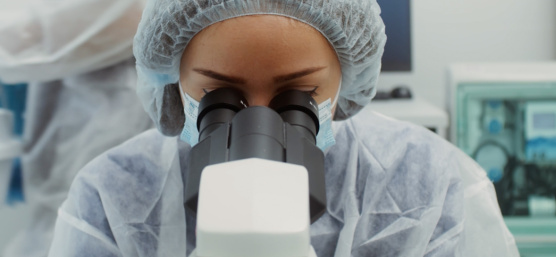
The right industrial camera for medical technology depends on the desired application. Areas of application such as diagnostics, ophthalmology, endoscopy, laboratory automation, digital pathology or surgical imaging each place different demands on resolution, light sensitivity, dynamic range, frame rate and size. IDS offers 2D, 3D, AI and monitoring cameras for this purpose, each with different key features. These include high resolution, high light sensitivity, HDR, AI support, 3D technology and particularly compact designs. Sony STARVIS 2 sensors are frequently used for demanding lighting conditions. Sony Pregius and Pregius S sensors are often used for moving objects and precise measurement tasks.
Requirements for industrial cameras in medical technology
In medical technology, industrial cameras support image acquisition, documentation, process support and quality control, among other things.
For integration into medical systems, long-term availability, software support and customer-specific customizations are relevant in addition to image quality. Depending on the application, the cameras must also be suitable for continuous operation as well as defined temperature, humidity and hygiene requirements.
Reliable operation and constant image quality are crucial throughout the entire service life.
Typical selection criteria:
- High resolution for fine structures and small details
- Good light sensitivity with limited lighting
- Color-accurate representation for imaging and diagnostic applications
- Low image noise
- High dynamic range (HDR) for high-contrast scenes
- High frame rates for fast processes or motion analysis
- Compact designs for device integration
- Long-term availability of hardware and software
- Support for common interfaces and standards
- Simple integration into existing systems and development environments
Applications
Diagnostics

Imaging solutions for diagnostic examination and analysis systems.
Typical applications
Dermatology, ophthalmology, motion analysis, image-guided examination systems
Recommended camera families
uEye CP | uEye ACP | uEye XCP
Key features
High detail resolution, true-to-life color reproduction, flexible integration, large selection of sensors and interfaces
Case study
Optical spinal and posture analysis
In diagnostic applications, cameras support the acquisition, documentation, and evaluation of visual information. Depending on the diagnostic application, different requirements may take priority. While high detail resolution and true-to-life color reproduction are important in dermatology or ophthalmology, high frame rates or low latency may additionally be required for motion analysis or image-guided examination systems.
Camera families such as uEye CP, uEye ACP, and uEye XCP are suitable for many diagnostic applications. They offer different designs and integration options as well as a wide selection of sensors and interfaces. This allows them to be flexibly integrated into medical devices and diagnostic systems. Choosing the appropriate camera family depends on factors such as image quality, size, interface and system architecture.
The choice of image sensor also plays an important role. Sony STARVIS 2 sensors offer high light sensitivity, low image noise and an extended dynamic range. These properties can be particularly advantageous in applications with limited ambient light or high contrast differences. Models with STARVIS 2 sensors are available today in various IDS camera families, including uEye XCP, uEye LE as well as selected variants of uEye CP, uEye ACP and uEye SE.
Depending on the diagnostic task, however, other sensor technologies can also be useful. Applications with moving objects, high frame rates or special requirements for geometric accuracy sometimes benefit from global shutter sensors or camera models designed specifically for these tasks.
Ophthalmology

Imaging systems for ophthalmological diagnostic and examination systems.
Typical applications
Retina screening systems, slit lamps and other ophthalmological applications
Recommended camera families
uEye CP | uEye SE | uEye XCP
Key features
High resolution, large sensor selection, different interfaces, high light sensitivity and low image noise
Case study
High-end image documentation system for eye diagnostics using digital slit lamp photography
The requirements in ophthalmology are among the highest within medical imaging. Applications such as retina screening systems or slit lamps must reveal the finest anatomical structures and reproduce colours as natural as possible.
The uEye CP, uEye SE and uEye XCP camera families are suitable for ophthalmological systems. Their high resolutions capture the finest vascular and tissue structures in great detail. They offer a large sensor selection as well as different interfaces for integration into medical devices. Depending on the lighting situation, STARVIS 2 sensors can offer advantages due to their high light sensitivity, extended dynamic range and low image noise. The compact design is suitable for space-critical medical devices. The board-level cameras of the uEye SE family can be integrated into medical devices with particular flexibility.
Endoscopy

Imaging systems for endoscopic examination and diagnostic systems.
Typical applications
Rigid and flexible endoscopes
Recommended camera families
uEye LE | uEye ACP | uEye XCP
Key features
Compact design, high light sensitivity, small footprint, flexible integration
Case study
Automated inspection of endoscopes
Endoscopic systems place special demands on size, heat generation, light sensitivity and ease of integration. Compact camera models such as uEye LE or custom-configurable variants of the uEye ACP family are particularly suitable for such applications. Depending on the system architecture, models from the uEye XCP series can also be used. Sensors with high light sensitivity and extended dynamic range support detailed imaging even in limited ambient light or strongly varying brightness conditions.
Laboratory and life science applications

Industrial cameras for laboratory, analysis and life science systems.
Typical applications
Laboratory automation, microscopy, digital pathology, whole slide imaging
Recommended camera families
uEye CP | uEye ACP | uEye Warp 10
Key features
High image quality, reliable color reproduction, fast data transmission, high resolutions
In laboratory automation, cameras are used to detect, sort and inspect samples. The uEye CP and uEye ACP provide high image quality and reliable color reproduction for this purpose. The fast USB 3 data transmission enables rapid image acquisition and evaluation.
In microscopic examinations, cells, tissues and other structures are displayed magnified. The high image quality of the uEye CP and uEye ACP supports detailed analysis. In particular, cameras with the high-resolution, square Sony IMX676 sensor are suitable for microscopy applications, as they can capture a large field of view with high detail accuracy. Reliable color reproduction makes it easier to distinguish between different structures.
Digital pathology enables the analysis of tissue samples directly on the screen. With whole slide imaging, microscope slides are digitized automatically. For systems with very high resolutions and high data throughput, models from the uEye Warp10 family can be a suitable solution. The 10GigE interface enables the transmission of large volumes of image data with low latency. Whether a global shutter sensor is required depends on the scanning method and the motion characteristics of the system.
Surgical imaging and surgical assistance
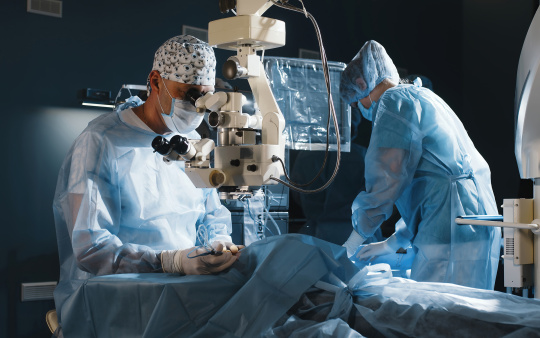
Imaging systems for surgical systems and medical assistance applications.
Typical applications
Surgical systems, minimally invasive procedures, surgical monitoring, patient monitoring
Recommended camera families
uEye CP | uEye Live (uEye SFA, uEye SLE)
Key features
High-resolution real-time imaging, reliable data transmission, high image quality, HDR support
In diagnostic applications, cameras support the acquisition, documentation, and evaluation of visual information. Depending on the area of application, different requirements may be of primary importance. While high detail resolution and true-to-life color reproduction are important in dermatology or ophthalmology, high frame rates or low latency may additionally be required for motion analysis or image-guided examination systems.
Camera families such as uEye CP, uEye ACP, and uEye XCP are suitable for many diagnostic applications. They offer different designs and integration options as well as a wide selection of sensors and interfaces. This allows them to be flexibly integrated into medical devices and diagnostic systems. The selection of the suitable camera family depends, among other things, on the requirements for image quality, size, interface and system architecture.
The choice of image sensor also plays an important role. Sensors of the Sony STARVIS 2 family are characterized by high light sensitivity, low image noise and an extended dynamic range. These properties can be particularly advantageous in applications with limited ambient light or high contrast differences. Models with STARVIS 2 sensors are available today in various IDS camera families, including uEye XCP, uEye LE as well as selected variants of uEye CP, uEye ACP and uEye SE.
Depending on the diagnostic task, however, other sensor technologies can also be useful. Applications with moving objects, high frame rates or special requirements for geometric accuracy sometimes benefit from global shutter sensors or camera models designed specifically for these tasks.
Overview Which camera family is suitable for which medical field?
Medical field |
Typical challenge |
Recommended camera family |
Recommended sensor / feature |
|---|---|---|---|
Diagnostics |
Make the finest anatomical details visible and document them reproducibly |
Sony STARVIS 2 IMX662, IMX664, IMX675, IMX676, IMX678 (high light sensitivity and dynamic range) |
|
AI-supported diagnostics |
Analyze image data directly and support automated decisions |
Integrated Edge AI, Sony IMX900 (Pregius S) or Sony IMX678 (STARVIS 2) |
|
Ophthalmology |
Capture retina, fundus and eye structures with high contrast and color fidelity |
Sony STARVIS 2 |
|
Eye tracking |
Capture very fast eye movements in real time |
Event-based sensor technology, Sony Pregius S or STARVIS 2, NIR, compact design |
|
Endoscopy |
Compact integration in limited light |
Sony STARVIS 2 (low-light, NIR sensitivity, HDR) |
|
Microscopy |
Image cell structures and the smallest details precisely |
Sony STARVIS 2 (for static image capture) |
|
Laboratory automation |
Automate, capture and evaluate samples |
Sony Pregius / Pregius S for moving samples, Sony STARVIS 2 for low-light and color applications |
|
Digital pathology |
Digitize microscope slides quickly and without distortion |
Sony Pregius IMX5xx (10 GigE for high data throughput) |
|
Surgical imaging |
High-resolution real-time imaging with low latency and good color reproduction |
uEye CP (GigE) |
Sony STARVIS 2, HDR |
Radiotherapy |
Position patients safely and document treatments |
Sony STARVIS 2, high color stability, HDR |
|
Patient monitoring |
Monitor patients without contact and document events |
Streaming & Event Recording, Sony Pregius / Pregius S for moving samples, Sony STARVIS 2 for low-light and color applications |
|
Patient positioning (3D) |
Capture precise depth information for alignment |
ToF technology (3D) |
|
Orthopedics & Prosthetics |
Capture body shapes and movement sequences in three dimensions |
Stereo vision |
|
Pharmacy |
Ensure the highest quality standards in production and packaging |
Sony STARVIS 2 |
|
Instrument inspection |
Detect damage, contamination or manufacturing defects |
Sony STARVIS 2 |
Why are IDS cameras particularly suitable for medical technology?
- Long-term availability:
- IDS offers long-term availability commitments for all its own camera series, thereby creating investment security for medical devices with long development, approval and life cycles.
- Product quality:
- Thanks to a high level of vertical integration and strict quality standards, IDS develops and produces particularly reliable cameras for long-term use. IDS grants a three-year warranty on all its own camera series, which can be extended to up to five years for an additional fee.
- Made in Germany:
- IDS has been developing and manufacturing in Obersulm, Baden-Württemberg, since 1997. With more than 320 employees and over two million cameras in use worldwide, the company provides many years of experience.
- Customized development:
- IDS has extensive experience with OEM customizations for medicine and life sciences. Hardware and software can be specifically adapted to individual requirements.
- Software ecosystem:
- The IDS peak SDK supports Linux, Windows and macOS and facilitates integration.
Conclusion:
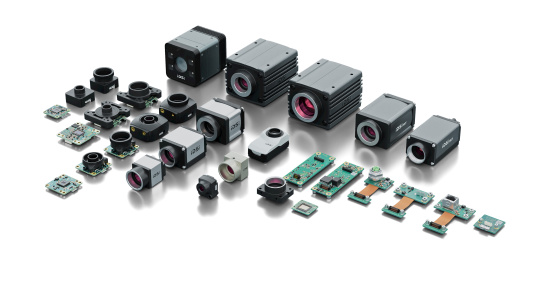
From microscopy to endoscopy to surgery: Industrial cameras provide the imaging foundation for modern medical and life science applications. The right camera depends on requirements such as resolution, light sensitivity, dynamic range, frame rate, depth information, integration and data processing.
IDS offers 2D and 3D cameras, monitoring and AI cameras as well as event-based vision technology for this purpose. STARVIS 2 sensors are particularly suitable for demanding lighting conditions, while Pregius and Pregius S sensors show their strengths with moving objects and precise measurement tasks. For 3D applications, suitable technologies for capturing depth information are available with the Ensenso stereo vision cameras and the Nion 3D ToF camera. The selection should therefore always be based on the specific image processing task as well as the requirements for image quality, system architecture, integration and availability.

Since 2011, Oliver Senghaas has served as Head of Marketing at IDS, driving the company’s global marketing strategy. He is responsible for corporate communications, brand management, digital campaigns, the content and functional development of the company websites and B2B web store, as well as the creation of technical documentation. His focus is on combining technology and creativity to position IDS clearly in the field of industrial image processing.
Your project
How can we support you in your project? Together we will find the right solution for you!
Vision Channel
Videos and live sessions about machine vision.
Newsletter
Stay up to date and subscribe to our newsletter.