

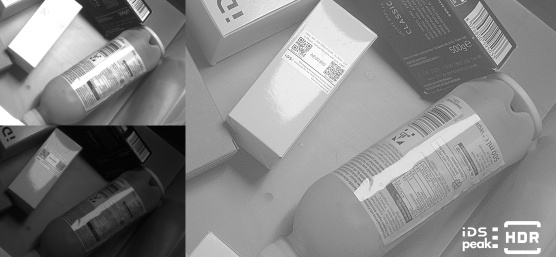
Multiple HDR technologies, one Software
Clear HDR, Quad HDR, and Sequence HDR – IDS simplifies the path to the suitable HDR solution
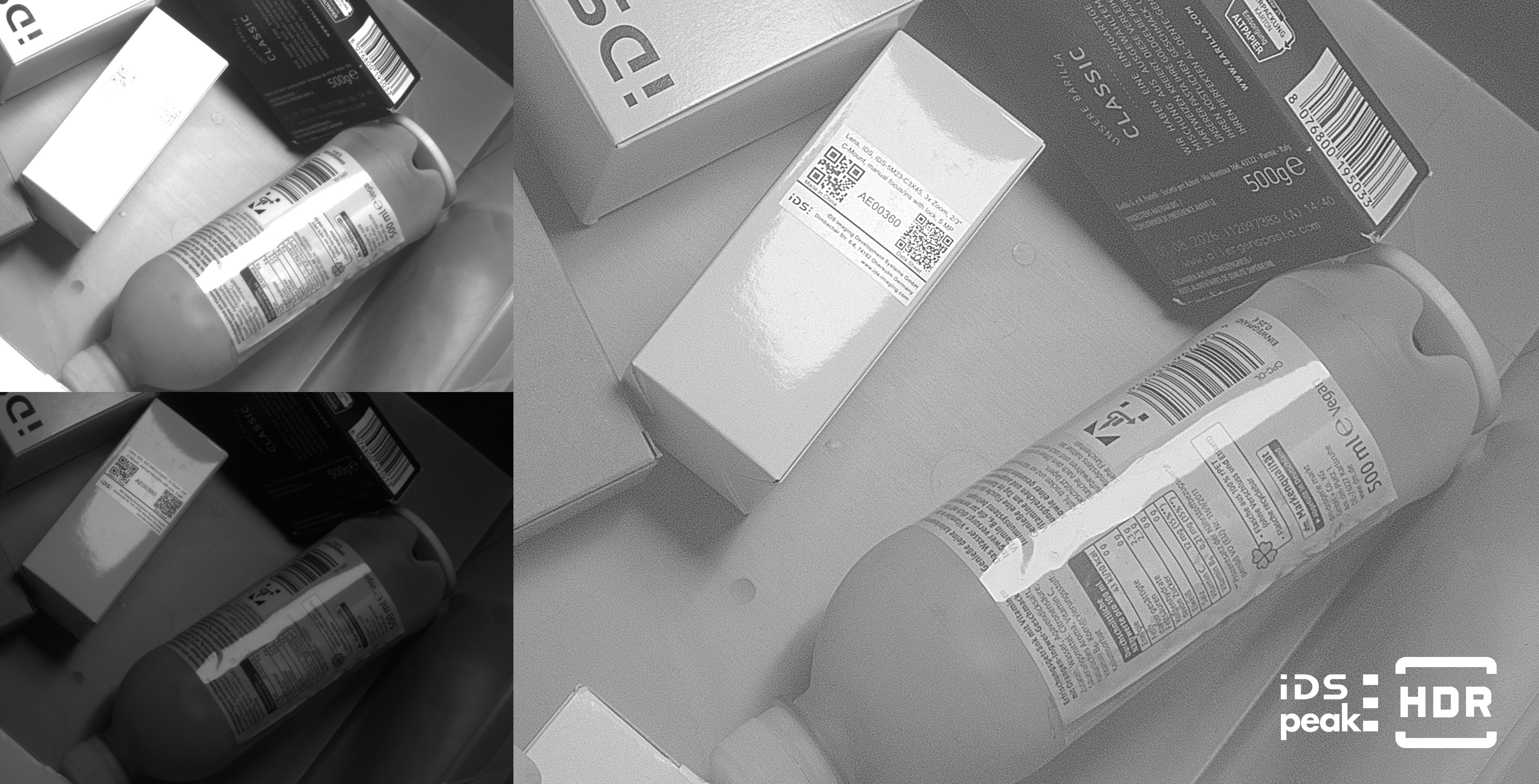
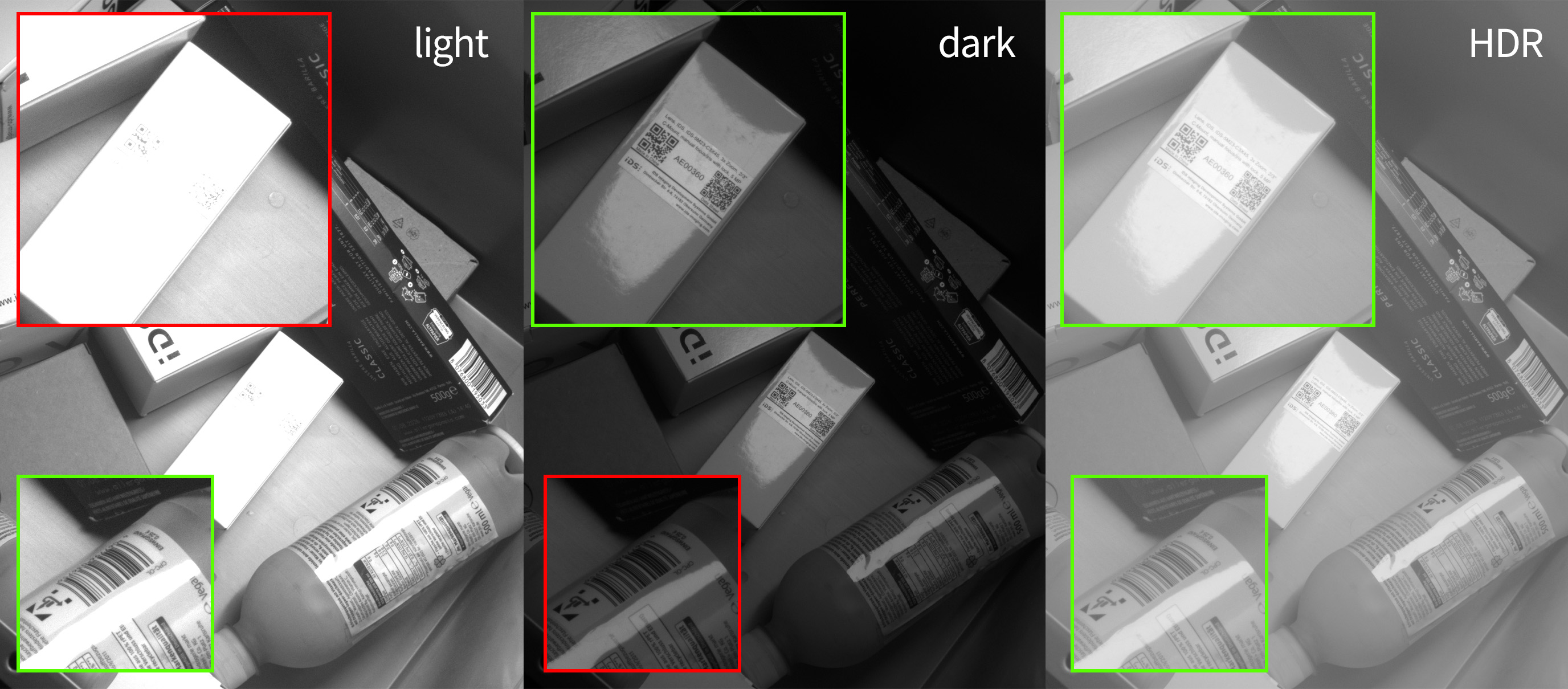
Strong reflections, changing lighting conditions, or large differences in brightness make many industrial image processing applications difficult. High Dynamic Range (HDR) extends the range of brightness levels that can be captured and reveals details that may be lost in overexposed or underexposed areas of conventional images. Since different applications have different requirements, choosing the suitable HDR method is an important step. Depending on the application, dynamic range, resolution, or motion tolerance are the focus.
Accordingly, IDS Imaging Development Systems GmbH combines various HDR technologies within a single software environment. This allows users to compare, test, and integrate the respective features into their applications more easily. With Clear HDR, Quad HDR, and Sequence HDR, IDS supports three HDR modes for different requirements regarding dynamic range, resolution, and motion. HDR-capable IDS cameras can be configured, output data captured, and HDR results processed and visualized via IDS peak.
"Users want to use HDR and not develop HDR," says Heiko Seitz, Product Marketing Manager at IDS Imaging Development Systems. "That is why we combine various HDR technologies as end-to-end Software support from capture to the finished HDR result in IDS peak. This simplifies evaluation, reduces integration effort, and accelerates the path to the right solution."
HDR is more than just a function of the image sensor. Only the interaction of the sensor and the camera firmware with the image processing on the PC makes the additional image information practically usable. That is why IDS integrates central functions such as camera acquisition control, various image data formats, as well as the merging of HDR sensor data and tone mapping algorithms directly into the IDS peak SDK. Users thus gain access to individual HDR exposures as well as to calculated HDR and LDR results. The IDS peak Cockpit allows users to explore and test the entire HDR toolchain and to visualize the resulting HDR images. All of this is possible without prior programming. Source code samples further simplify integration into users' own applications.
Numerous industrial image processing applications benefit from this approach. These include quality control of reflective components, logistics and OCR applications, robotics and automation, welding processes, as well as traffic and outdoor applications. In medical technology and microscopy, too, HDR can be used to make more image information from high-contrast scenes usable.
Further information: https://ids-imaging.us/technical-articles-details/items/hdr-industrial-cameras.html
Images (© IDS Imaging Development Systems GmbH)

For over ten years, she has been creating press releases and application reports and designing corporate topics and technical product communication with corresponding expertise. Thanks to her experience in strategic B2B communication, she formulates precise messages and delivers well-founded, technically robust content - always with a focus on authenticity and clarity.
Download
Download Word file and images here. 4,37 MB
Contact
Please contact our team, we will be happy to help you.
Press contact
Do you need background information, statements or images for journalistic purposes? The IDS editorial team will be happy to help you.
Newsletter
Stay up to date and subscribe to our newsletter.