

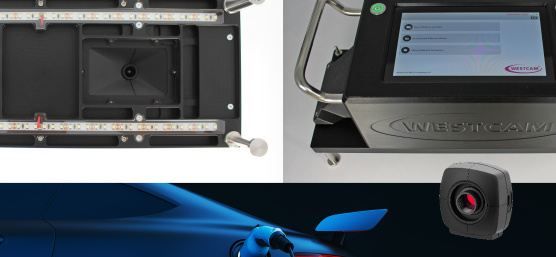
Mobile quality control for thermal paste in electric vehicle battery production
At a glance
- Industry:
- battery assembly in e-mobility
- Camera:
- U3-3886LE Rev.1.2, uEye LE
- Task:
- inspection of the gap filler wetting degree on battery mounts for electric vehicles
- Challenge:
- the distribution of the thermal paste must be checked reproducibly and evaluated according to clear specifications
- Solution:
- mobile GCMB photo box with two cameras, integrated mini-PC, calibration, and customer-specific evaluation
- Customer benefit:
- the solution enables efficient spot checks, traceable results, and systematically documented test data
When gap filler becomes visible
In electric vehicle battery assembly, components must be fitted together with a high degree of precision. Equally important is the reliable application of process-relevant materials such as gap filler or thermal interface materials. Thermal interface materials form a thermal conduction path between the battery module and the cooling system in vehicle batteries, thereby supporting the dissipation of waste heat. For quality assurance, this means: the distribution of the thermal paste must be checked reproducibly and evaluated according to clear specifications.
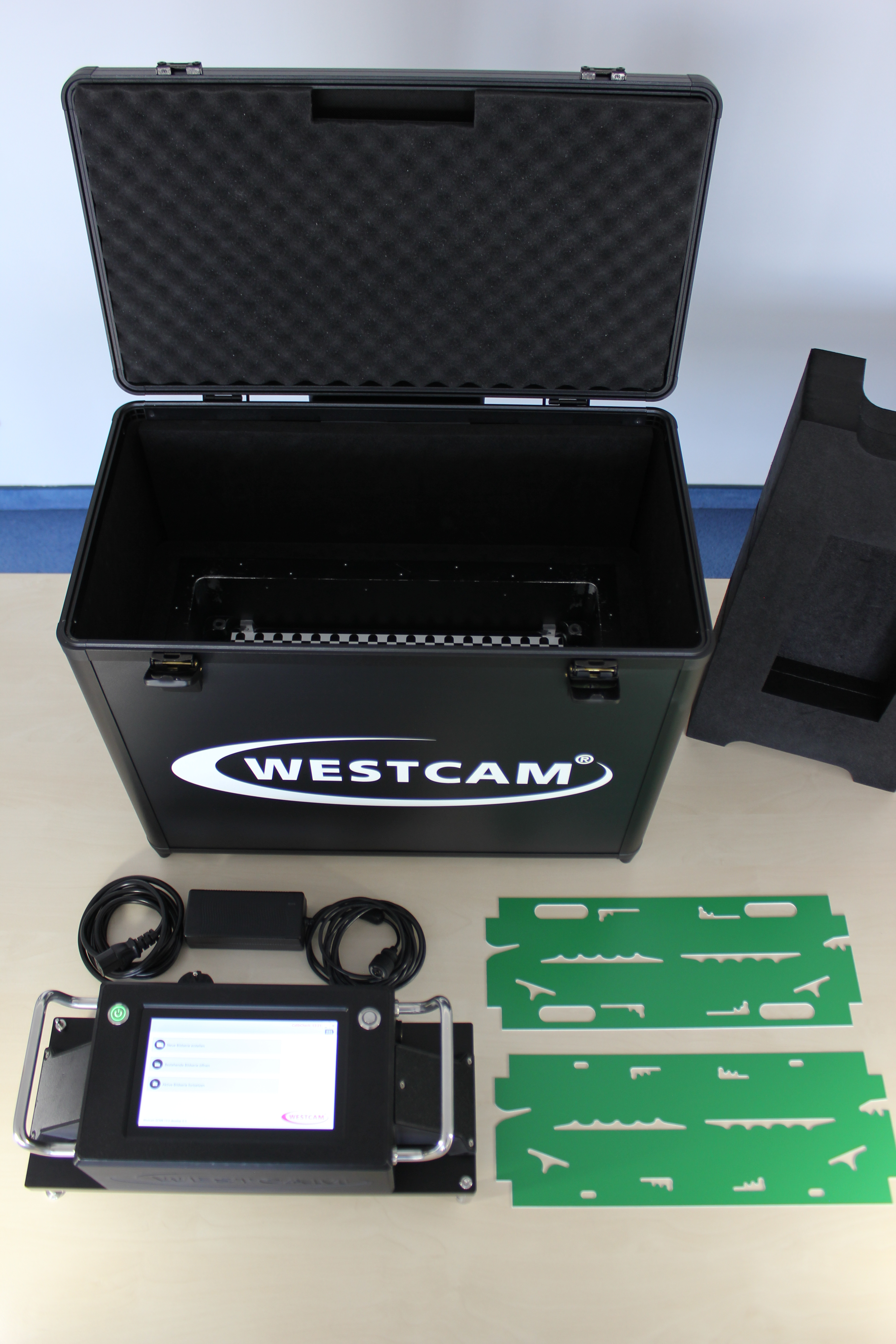
For a supplier to a leading German sports car manufacturer, the Austrian company WESTCAM Technologies developed the GCMB, the Gapfiller Coverage Measurement Box. The internally developed measurement system is used for quality control of the gap filler wetting degree on battery mounts for electric vehicles. The mobile photo box is used for spot checks of the gap filler distribution after battery units have been fully automatically integrated into the battery frame. The goal is efficient, reproducible, and standard-compliant quality control that strengthens process reliability and product quality.
Solution: mobile photo box for flexible spot checks
The GCMB is designed as a mobile inspection unit. It can be used flexibly, operates in inspection mode without annoying cables, and performs the inspection autonomously via an integrated mini PC. Calibration is an integral part of the system and supports a repeatable inspection process directly in the production environment. WESTCAM positions such mobile inspection systems for complex and unusual measurement and inspection tasks where standard smart camera solutions do not lead to the desired result.
“With the GCMB, we have developed a mobile inspection solution that combines image acquisition, calibration, and evaluation in one compact system. Two cameras capture the wetted area. Subsequently, the image data is evaluated and assessed according to customer specifications. This allows spot checks of the gap filler wetting degree to be carried out efficiently and reproducibly,“ explains Harald Unterrainer, Managing Partner and CEO of WESTCAM Technologies GmbH.
The strength of the solution lies in the combination of mobility, integrated computing unit, and customer-specific evaluation. The GCMB is not a rigid standard system, but is adapted to the respective measurement and inspection task. This makes it suitable for applications in which inspection tasks must be solved precisely, flexibly, and close to the process.
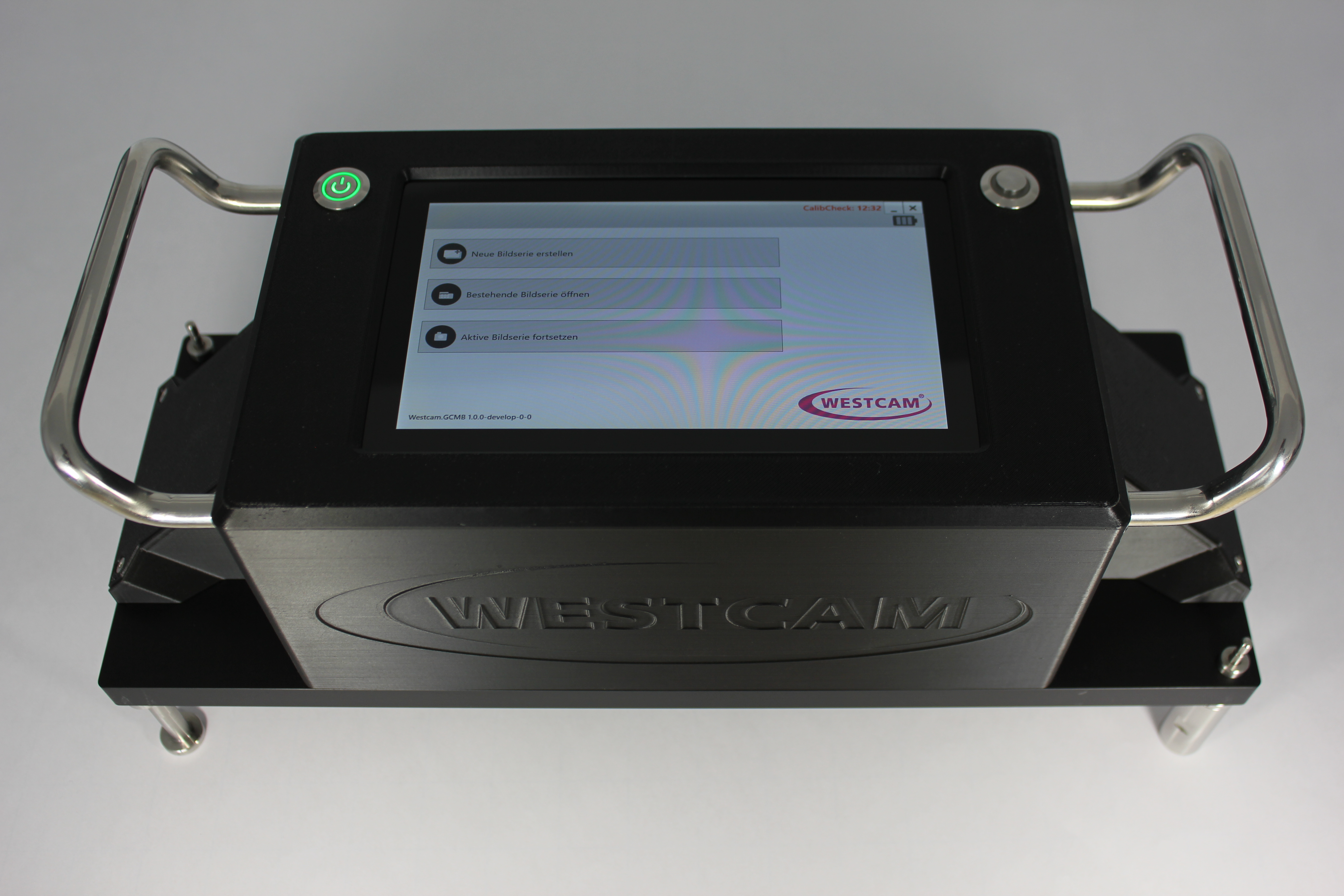
Image processing: capture, merge, evaluate
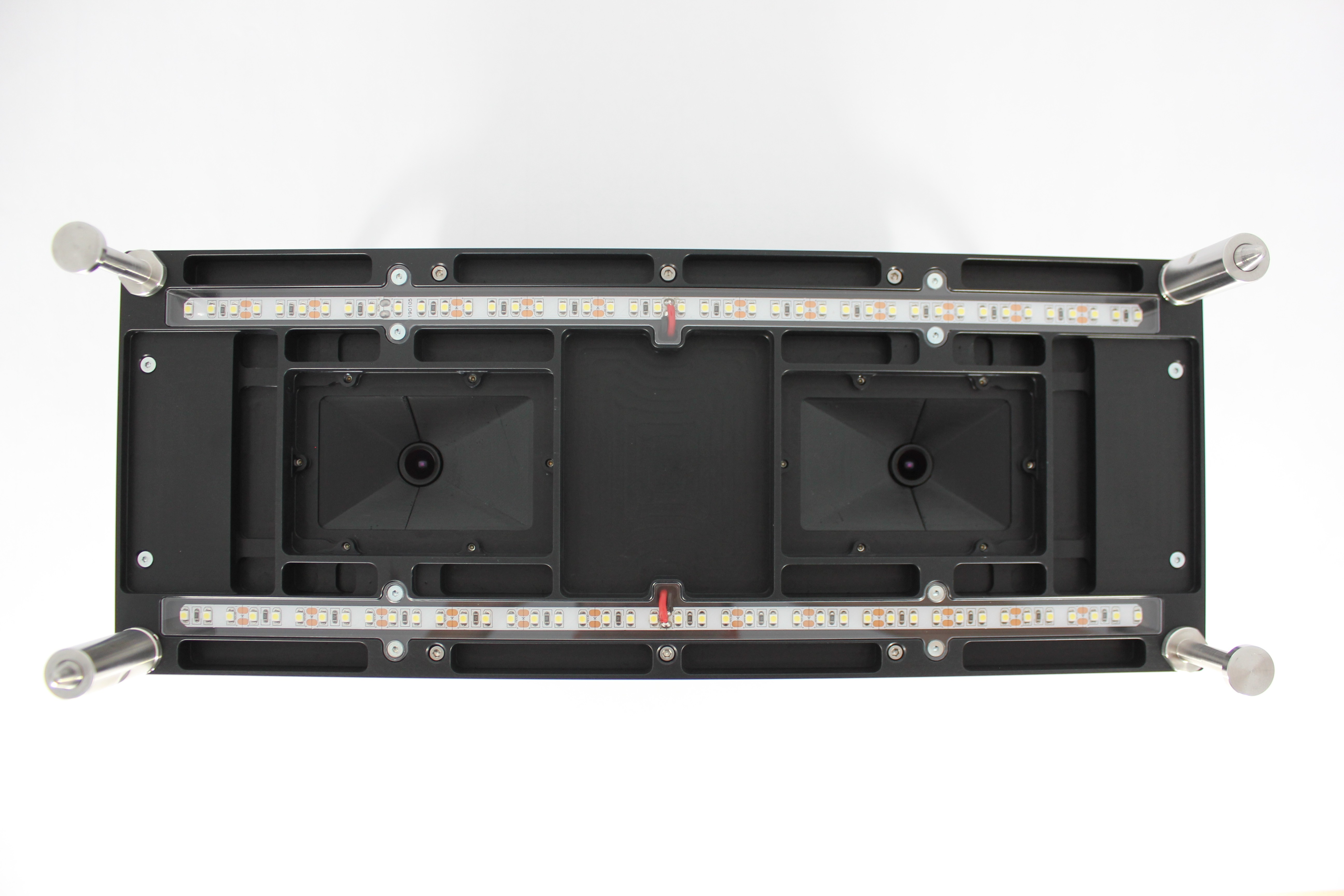
In the inspection system, two USB 3 uEye LE cameras from IDS capture the area of a battery holder for an electric vehicle that has been wetted with thermal paste. Afterwards, the wetted area is inspected according to customer specifications. The image processing system merges the camera images, evaluates the wetted area, and assesses the result as OK (okay) und NOK (not okay).
The focus is, among other things, on the fill level, defects, and the distance between the defects. The inspection result is then stored. Offline images can also be loaded and analyzed. Calibration targets are available for camera calibration, while test targets support verification of system functionality.
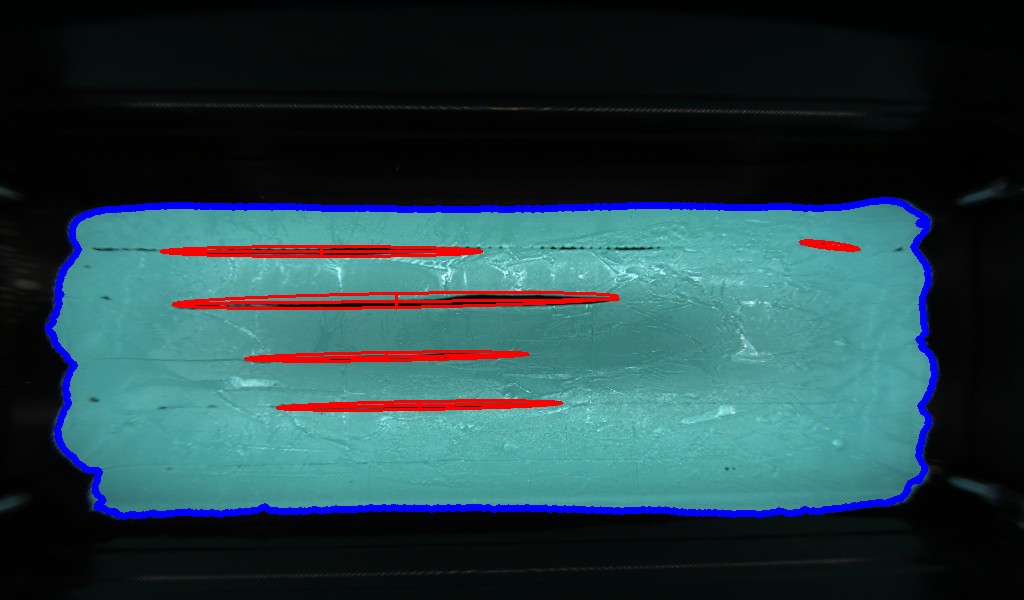
Camera technology: compact, high-resolution, easy to integrate
The application uses the IDS U3-3886LE Rev.1.2 with Sony IMX178 rolling shutter CMOS sensor. The camera offers a resolution of 6.41 MP or 3088 × 2076 pixels and combines USB3 Vision with a light-sensitive Sony STARVIS sensor with BSI technology. For the GCMB, interface, sensor, size, and price are the primary relevant selection criteria.
The cameras were integrated via IDS peak. The SDK provides programming interfaces and software tools for operating and programming the cameras and supports fast, standard-compliant integration into custom applications. This makes the camera a perfect fit, both technically and in terms of software, for a custom, mobile inspection system. The compact design of the IDS cameras facilitates integration into small devices and portable systems.
Customer benefit: process reliability in a mobile system
The GCMB bundles several requirements in one system: mobile inspection, autonomous operation via an integrated mini-PC, integrated calibration, and adaptability to individual measurement and inspection tasks. For the user, this creates a reproducible inspection process that combines image acquisition, evaluation, assessment, and result storage.
The solution supports quality assurance in applications where both flexibility and traceable results are required. Instead of laboriously adapting random sample testing to stationary inspection environments, the mobile photo box brings image processing into a compact, transportable design. In this way, prescribed quality controls can be carried out efficiently and inspection results can be systematically documented.
Outlook: image processing as a building block of efficient quality assurance
With the increasing automation of industrial processes, the importance of camera-based quality assurance is also growing. Image processing systems enable objective, reproducible inspection and provide data that can be used for the continuous optimization of manufacturing processes. Especially in battery production, where high quality requirements and increasing production volumes meet, mobile and flexibly deployable inspection systems can gain in importance. They help standardize manual inspection processes, detect defects at an early stage and provide quality data directly within the production workflow.
The GCMB shows how complex inspection tasks can be mapped in a reproducible manner through the use of image processing. Such approaches are likely to contribute in the future to making quality assurance processes more efficient and meeting the increasing demands of modern production environments.
WESTCAM Technologies GmbH

WESTCAM Technologies specializes in the automation of quality assurance tasks with specially developed image processing systems. With many years of experience in industrial image processing, the company realizes customized solutions for a wide variety of industries. The goal is to support manufacturing companies in making inspection processes more efficient, increasing process reliability, and sustainably improving quality.
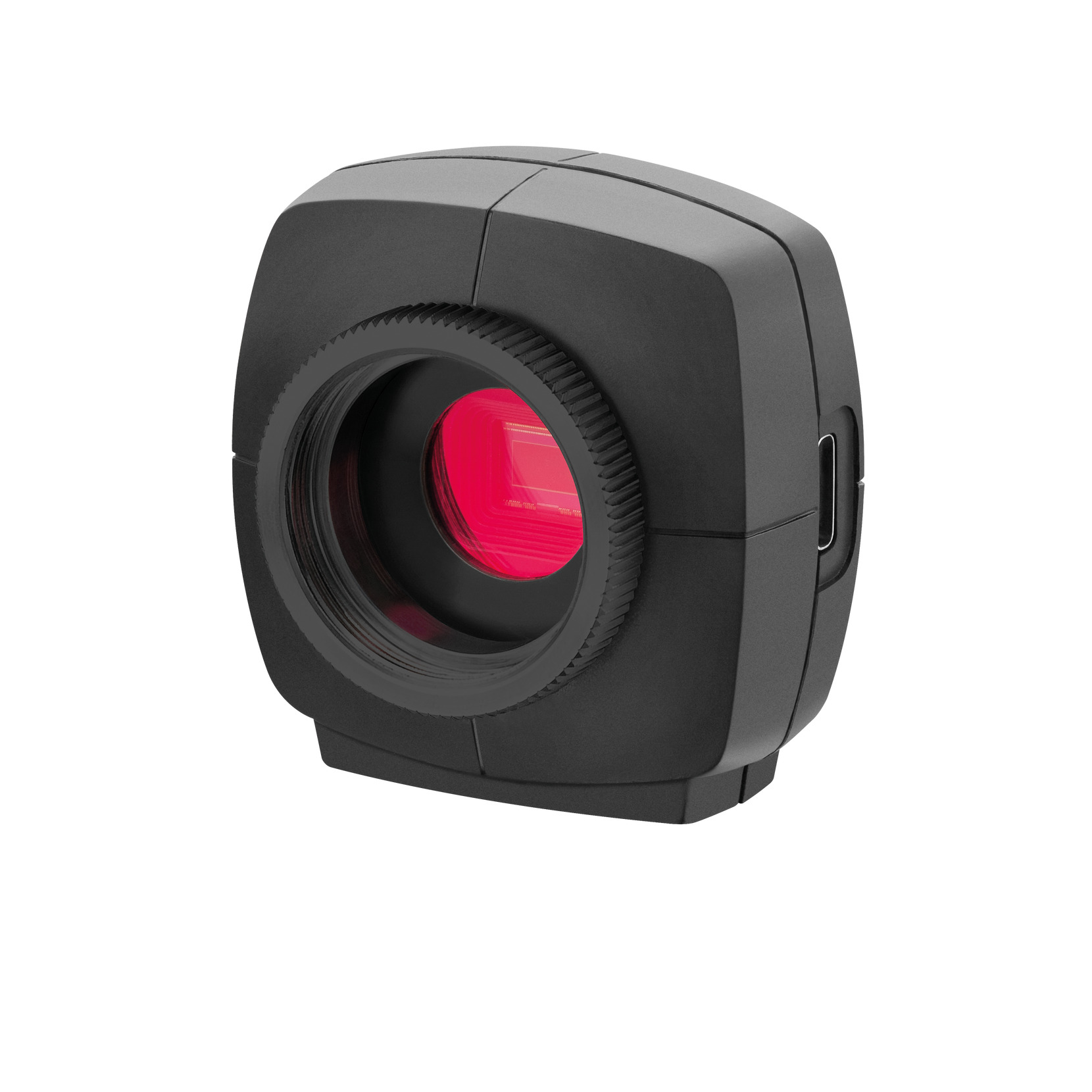
uEye LE
Model used: U3-3886LE Rev.1.2

For over ten years, she has been creating press releases and application reports and designing corporate topics and technical product communication with corresponding expertise. Thanks to her experience in strategic B2B communication, she formulates precise messages and delivers well-founded, technically robust content - always with a focus on authenticity and clarity.
Your project
How can we support you in your project? Together we will find the right solution for you!
Vision Channel
Videos and live sessions about machine vision.
Newsletter
Stay up to date and subscribe to our newsletter.
Applications
Discover how industrial cameras are shaping the future.